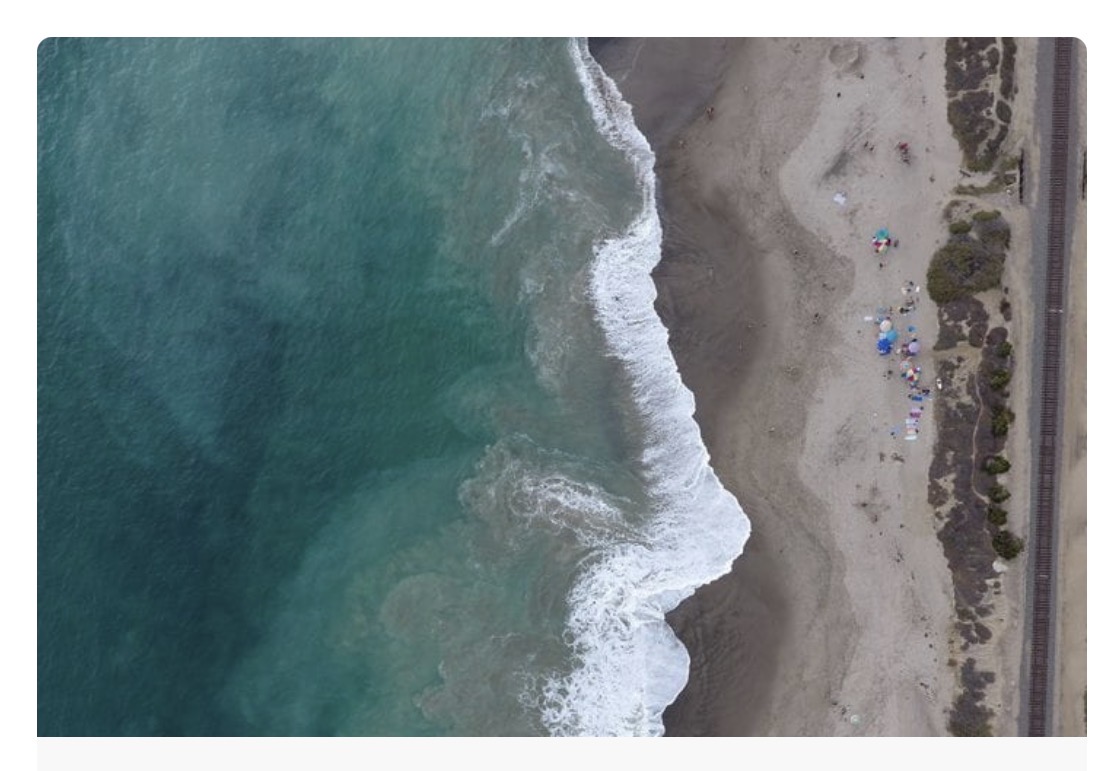
Southern California beaches expanded 500 acres the past 40 years, including San Clemente surf beaches, according to a new report from UC Irvine.

Beaches like Huntington and Newport grew significantly, in part due to jetties and harbors that help trap sand, researchers say.
San Clemente beaches lost more land than other Southern California beaches
San Clemente beaches from Dana Point to San Onofre suffered some of the worst losses. Specifically, the report states, Malibu, Doheny, San Clemente, and San Onofre “fared some of the region’s most severe erosion, with beaches narrowing at rates exceeding 1 meter per year.” Local surfers have observed that decline anecdotally for decades. The city of San Clemente is currently debating solutions to address the severe erosion at area beaches. One city proposal would create new surf breaks.

The UC Irvine study uses NASA satellite data and new technological methods making it the most detailed methodology to date. Researchers state the findings provide evidence for effective methods to shore up beaches (in other words, breakwaters help).

However, San Clemente area beaches are unique due to the railway located along the shoreline. That issue is not addressed in this study.

While the San Clemente beaches could benefit from manmade structures, such as jetties and breakwaters, the train tracks near the local beaches create another obstacle by blocking sand replenishment from sediment sources inland.

Key excerpts from the report are provided below.
Details from UC Irvine report about erosion at Southern California beaches
Key takeaways
- California’s beaches have, on average, widened in the past four decades.
- Areas of severe beach erosion are offset by areas of dramatic beach expansion.
- Researchers used satellite data and newly developed signal processing techniques to observe coastal changes over time.
- Funding was provided by NASA and the United States Geological Survey.
Southern California’s beaches have grown more than 500 acres over the past four decades despite being one of the most heavily urbanized and dammed coastal regions in the world, according to a new study conducted by researchers at the University of California, Irvine, the U.S. Geological Survey and other institutions.
The research analyzed shoreline changes across California from 1984 to 2024 using newly developed satellite-derived measurement methods. It found that Southern California beaches expanded by approximately 10 percent during this period, even as dams and urban development were expected to starve coastlines of sediment and accelerate erosion.
“This is a counterintuitive finding considering previous reports of widespread beach erosion in Southern California,” said co-author Brett Sanders, UC Irvine professor of civil and environmental engineering. “While several individual beaches did experience severe erosion, there were also several that experienced dramatic widening…”
The researchers found that 49 percent of the shoreline showed significant widening, and 31 percent experienced narrowing. The Zuma littoral cell near Malibu and northern portions of the Oceanside littoral cell, which include the revered surfing and recreational beaches of Doheny, San Clemente and San Onofre, experienced some of the region’s most severe erosion, with beaches narrowing at rates exceeding 1 meter per year…
Beach growth has been concentrated at human-made coastal structures such as harbors, jetties and natural convergence zones that trap longshore sediment transport. Rapidly growing beaches include popular locations like Huntington Beach and Santa Monica, and less frequented stretches of coast, such as the beach between Ventura and Oxnard.
“The primary challenge facing Southern California beaches is not sediment shortage, but sediment distribution,” said lead author Jonathan Warrick, research geologist at the U.S. Geological Survey’s Pacific Coastal and Marine Science Center in Santa Cruz, Calif. “Some of the most rapidly widening beaches – including McGrath State Beach, Huntington Beach, and Venice Beach – now measure approximately 200 meters, or over 600 feet, wide. These locations benefit from sediment trapped by coastal structures or accumulating in natural sand convergence zones.”
Several Southern California harbors – including Santa Barbara, Ventura and Channel Islands/Port Hueneme – already operate sediment bypass systems to move sand past barriers such as jetties and breakwater structures. The study suggests that expanding such efforts could provide “more equitable, widespread and natural use of littoral sediment resources.”
The San Pedro littoral cell, which includes the shoreline of the Sunset Beach, Huntington Beach and Newport Beach communities, provides a dramatic example, where beach engineering projects have resulted in massive beach expansion, according to the researchers. Centered near Huntington Beach, there was an average widening of 25 meters (over 80 feet) across the cell during the 40-year study period.
The findings challenge assumptions about the impacts of dams and land use on coastal change. While California’s large dams have indeed reduced sand flux to the coast to approximately half of historical levels, other sources, including bluff erosion, and especially beach artificial additions of sand through mechanical means, have sustained or expanded beaches in many locations.
Link to the full report from UC Irvine.
Leave a Reply