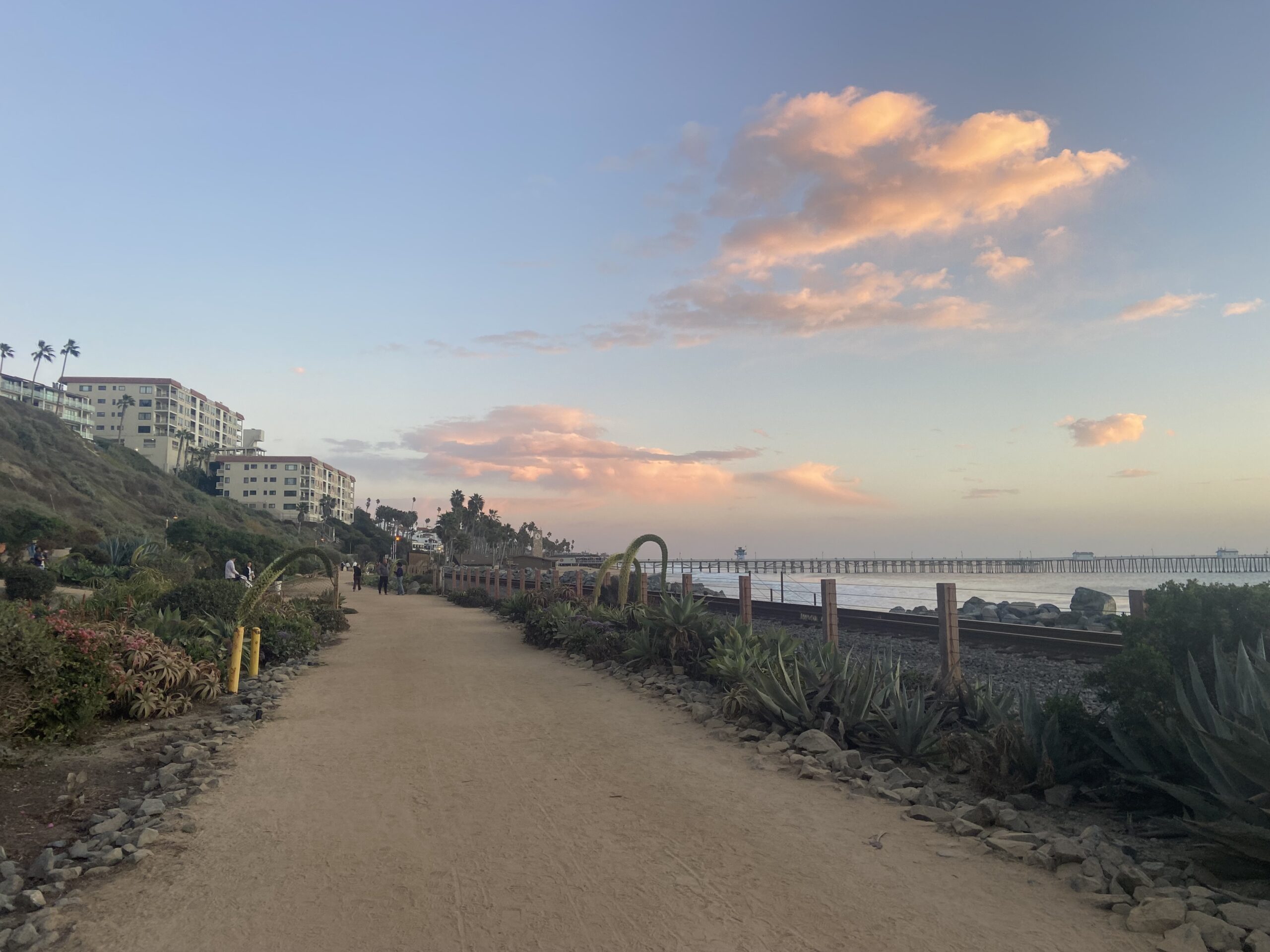
Next Tuesday, July 29, 2025, Orange County is hosting a public listening session to discuss plans to fix San Clemente’s eroding beaches. This is part of an ongoing restoration project that has significant consequences for beach access, railway design, and, yes, quality of surf in San Clemente.
The next meeting will be virtual from 5:00 – 6:30 p.m. PT. Registration is fast and easy through this link: https://bit.ly/CRRS-Jul29.
This is related to — but different from — the coastal rehab proposal by the city of San Clemente to build breakwaters at North Beach and State Beach (which might actually create new surf breaks).
The Orange County Transportation Authority (OCTA) is hosting the meeting and states:
Public involvement is a critical study component and fundamental to shaping its outcome. Initial listening sessions with stakeholders took place in 2024. Additional public meetings will continue throughout the study.
Join us at one of the upcoming public meetings to learn about updates and to provide input on the draft alternative concepts.
This OCTA page for the Coastal Rail Resiliency Study posts information about the meetings with video and audio archived from previous meetings.
The debate over how to address coastal erosion in San Clemente
Beach erosion in San Clemente has been an issue for decades and affects not only the quality of the beaches, but the stability of the rail line that runs along the ocean. Sand erosion is a natural occurrence, of course. But the natural means of sand replenishment — namely, sediment runoff from waterways flowing into the ocean — have been obstructed by urban development. Likewise, emergency efforts to shore up the coastline with boulders (riprap) have proven counter-productive over time, worsening the erosion problem.
This current study will provide a detailed analysis of seven critical miles of track between Dana Point and San Clemente.

According to OCTA, a “separate long-term study will look at potential rail line relocation to an inland alignment between San Juan Capistrano and San Onofre State Beach.”
However, some argue that the best way to address the ongoing erosion is to move the train tracks away from the immediate coast. At a minimum, advocates say the government should not rely on armoring the rail line with riprap.
Riprap can be “the kiss of death for beaches”
The nonprofit Bring Back Our Beaches says OCTA seems to be genuinely interested in public comment, “(b)ut they still don’t seem to grasp the nuances of the Capistrano Bight, the way our embayment holds sand, or how their reliance on rock and hardscape undermines the beach’s ability to naturally heal.”

On Instagram, the Bring Back Our Beaches warns the most important component is “how much sand will be placed in front of the riprap to recharge the system and provide a natural defense; i.e., keep water and waves off the riprap (the kiss of death for beaches).”
Surfrider says move the tracks, don’t use riprap to protect the coastline
Surfrider, a national nonprofit focused on protecting the ocean and beaches, is emphatic about the course of action that local government should pursue to restore and protect San Clemente beaches. They posted a petition online and published their arguments online this past April. We’ve excerpted key parts below.
With the chronic threat of erosion and accelerating sea level rise, Surfrider has been urging OCTA to move the tracks off this stretch of coastline for over two decades.
Last year, we raised concerns about OCTA’s plans to protect the railroad by burying San Clemente’s State Beaches under tons of rock. Now it’s real. OCTA just submitted an emergency permit application to the California Coastal Commission that would allow them to build a new seawall or revetment stretching nearly 1,200 feet across San Clemente State Beach and Calafia State Beach — right in front of Calafia and the state campground.
By extending armoring here, we will lose public access, irreplaceable ecosystems, and recreational opportunities; not only that, we will exacerbate the already dire erosion problem unnecessarily.
Work under emergency permits is supposed to be temporary, according to the Coastal Commission, since it lacks environmental or engineering review and public participation. But this proposal walks, talks, and erodes the beach like a permanent wall. The scale is huge:
- 34,100 tons of new boulders for the revetment or wall (Area 4), and
- Up to 300,000 cubic yards of sand dumped in front of the rocks to make it look nice, until it is washed away by strong swells during high (and king) tide events.
For context, this is more than what was dumped next door at Cyprus Shores under emergency permits in 2021 and 2022 — where about 26,000 tons of boulders were placed on the beach. That ‘emergency’ seawall is still there today, and the beach in front of it? Basically gone. OCTA has recently applied to the Coastal Commission to make the Cyprus Shores seawall permanent.

This approach buries the public beach, making the stretch impassable for beachgoers, creating backwash at an iconic surf break, and cutting off access to San Onofre State Park.
The beach in front of the existing riprap at Cyprus Shore has disappeared and expanding armoring will cause a similar problem along San Clemente State Beach. It will also wipe out precious dunes, an important habitat for sensitive coastal and marine wildlife.
We’ve seen this play out before: rock goes in, sand disappears, public access shrinks, and the beach doesn’t come back.
In total, OCTA is framing this as a 95% sand / 5% rock project. But that 5%? It’s a lot of boulders that will not be removed, whereas sand replenishment does not typically stay long-term. And once the rocks go in, we rarely get a second shot to rethink it. Seawalls make erosion worse, drown our beaches and waves, and make our coast less resilient to climate change and rising seas.
Surfrider says nature-based solutions succeeded in Ventura
By way of comparison, Surfrider points to a past effort in Ventura that succeeded in rehabilitating the shoreline.
We know that nature-based solutions can work in California. Surfer’s Point in Ventura is a prime example of removing structures in harm’s way and making space for the coast. Coastal erosion will only get worse as seas rise over the coming decades. Planning for that reality now will save California’s precious coast. The below image, taken in 2023, shows Surfer’s Point after Phase 1 of the restoration project was complete.

The image below shows the state of Surfer’s Point before managed retreat and restoration. With careful coastal planning and management, we can restore San Clemente’s beaches too.

Join the public meeting help decide how to protect San Clemente’s beaches
Now is the time to voice your opinion about the coastal erosion plans. As local leaders are drafting proposals, help them determine what actions make most sense and will provide the greatest return on investment. We need all hands on deck to ensure longterm enjoyment of our beaches and surfing in San Clemente.
Details for the Virtual Meeting:
Tuesday, July 29, 2025
5:00 – 6:30 p.m.
Register Here: https://bit.ly/CRRS-Jul29
Webinar ID: 876 4063 9878
Call-in: +1 (669) 900-6833
Other recent updates
-
 Report: As SanO and Doho shrink, other SoCal beaches have grown
 -
 What you need to know about Orange County's plan to fix San Clemente beach erosion
 -
 What the July 4th Malibu surf video teaches us as Americans
 -
 San Clemente may build new surf breaks; strategy faces opposition
 -
 Sick sea lions found in SoCal abnormally early